Sunday, May 17, 2020

Let the Season Begin

     The garden season has begun in earnest.  Many of us have spent the past 1-2 weeks ridding our plots and paths of weeds/grass.  Completely removing as many weeds as possible is one of the keys to a successful herb and vegetable garden.  Weeds rob your crops of nutrients, they harbor pests, they harbor diseases, and they compete with your crops for water.


MCGA's Most Common Weeds (A short and not exhaustive list)

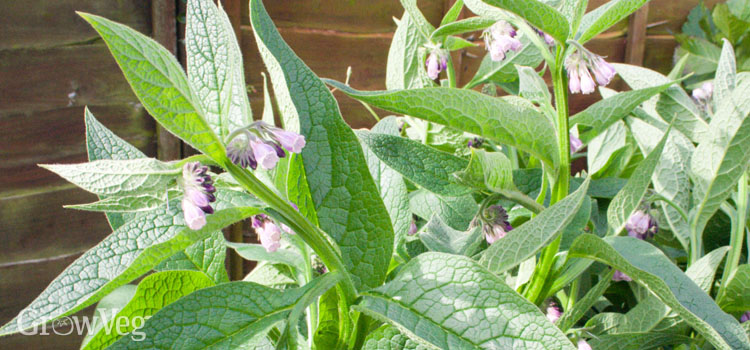
1. Comfrey-Marymoor park would like our help to eradicate this weed from the park.  Comfrey is a deep-rooted plant and must be dug out all the way down to its roots.  Any remaining roots will resprout continually. It can grow to 4 feet tall.


2.  Morning glory-Controlling bindweed can be difficult, but it can be done if you are willing to take the time. Part of why it is so hard to get rid of bindweed is that it has a large and hardy root system. Single attempts to remove bindweed roots will not be successful. Roots have to be investigated, traced, and dug out.

Morning glory roots

3.  Buttercup-Buttercups form a creeping mat of dense foliage that can quickly overtake the lawn or a garden bed. These perennial plants bear dark green, three-segment, toothed leaves and produce yellow flowers. Buttercups spread through both extensive roots and seeds. The only way to remove this plant is to dig this weed out manually.


4. Quack Grass and Crab Grass- These two grasses are hard to eradicate!  

Quack grass has miles and miles of white roots.  Each root segment will develop into a plant unless removed.  When digging quack grass follow each root and remove as much of it as possible. 


Crabgrass is slightly different.  It forms an umbrella-like clump with tiny but firm roots. Pull and dig the entire clump out to remove the plant.


5. Dandelion-Dandelions are a tap-rooted weed; the main root is long and thin like a carrot.  Removing the green top will not get rid of the plant, the entire root must be dug out and removed. 


Saturday, March 28, 2020

Cool Season vs. Warm Season Crops

MCGA is an open space that receives plenty of sun.  At the height of the summer, the sun rises at ~5:30 a.m. and sets at ~9:00 p.m.  There are many, many crops that thrive at MCGA, however, the temperature is a controlling factor in what can be planted.

As we plan our spring gardens, it is wise to think about the crops which prefer cooler spring temperatures. Also note:  crops like beets, carrots, turnips, and beans prefer direct seeding in the garden vs. being transplanted.

Cool-season crops can be planted in the spring and fall when the weather is cooler.  Warm-season crops need warmer soil and nighttime temperatures are consistently above 55F in the evening. (~Around mid-May).  See the list below.

Friday, January 31, 2020

Grow What You Like to Eat

As you peruse garden catalogs and search for seeds for the upcoming season, consider growing all the things you like to eat.


If you enjoy dumplings, garlic chives are a must-have for this delicious steamed or pan-fried Chinese staple.

Try Vietnamese coriander, an aromatic herb, that enlivens noodle bowls and stir fry.

Raw spearmint leaves that are tucked into Vietnamese summer rolls bring fragrance as well as a refreshing flavor. Chili peppers add mouth-watering heat to many dishes. 

Growing more herbs is not the only thing we have been recommending.  Adding flowers to your dishes for some spicy deliciousness.

I also have a saying “never eat the same salad twice.” Adding a pinch of this, a leaf of that can change your salad-eating experience. Flowers not only add color to salads; many blooms pack a flavorful punch.

Try this salad recipe:
1 baby zucchini, thinly shaved
Several stalks of fresh asparagus shaved
A pinch of baby beet greens, arugula, parsley, green fennel greens, mâche, baby lettuce
Herb of your choice
1 soft-boiled egg
Grana Padano (a hard cheese) shavings
Nasturtium flowers
Dress with a drizzle of your favorite vinegar, good oil, salt, and pepper.


 -Gia

Saturday, January 4, 2020

Gardening in the Off Season

We have barely passed the winter solstice. With each passing day, the PNW gets 1-2 mins more of daylight.  By the time May 1st, our cultivation deadline, the sun will rise at approximately 5:50 a.m. and set at 8:22 p.m. BUT, May 1st is still 4 months away.  What is one to do before May 1st?

Option 1: Collect, read, study, seed catalogs.

Option 2: As spring approaches, early bulbs like snowdrops start rearing their little heads.  Local gardens start their garden tours, here are some local gardens to check out.

https://www.kruckeberg.org/

https://www.seattlejapanesegarden.org/

https://bellevuebotanical.org/

Option 3: Wish for a sunny, warm day to visit your garden plot and do a bit of work on it.

Option 4:  Take some garden classes

http://www.mgfkc.org/education/growinggroceries/gg-classes-on-the-eastside

http://www.mgfkc.org/education/growinggroceries/gg-classes-in-seattle

http://www.tilthalliance.org/learn/learn/adultclasses

Option 5: Visit a local nursery and dream about spring

https://www.molbaks.com/

https://wellsmedinanursery.com/


However you spend your winter, we look forward to seeing you at our first work party, usually in the second week of April.


Sunday, April 7, 2019

Noxious vs. Nuisance Weeds

Let's begin with defining what a noxious weed is:  "Aggressive exotic plants can produce immense numbers of long-lived seeds and may overwhelm native species, degrade habitat for wildlife, stick, stab and poke, and may even poison livestock or burn your skin. "   Noxious weeds are great at reproducing and are so pernicious, that many are mandated for removal in Washington and King County.

There are several classes of noxious weeds and they require different amounts of attention and handling.

I. Regulated Class A noxious weeds (eradication required throughout Washington State including King County)

Examples are kudzu and milk thistle

II. Regulated Class B noxious weeds (control is required for these species in King County)

Examples are poison hemlock and tansy ragwort

III. Non-regulated Class B and C noxious weeds (Class B and C noxious weeds that are not designated for control in King County, control recommended but not required in King County)

Examples are Himalayan blackberry, from Iran and Armenia NOT the Himalayas and butterfly bush.


Nuisance weeds are those that interfere with YOUR gardening goals.  Often these weeds have anatomy much like those of noxious weeds that allow them to spread quickly and remain in your garden year after year.


They have thick tap roots that are hard to pull or dig up fully.  They may spread via miles of underground stolons and rhizomes like quack grass and bindweed.  They may also send up hundreds if not thousands of seeds per season.  Do you recognize these weeds from Marymoor Community Gardens?


Friday, March 22, 2019

Compost vs. N-P-K (Nitrogen, Phosphorus, and Potassium)

Have you ever wondered what the three numbers on the front of your fertilizer box stands for?  5-5-5, or 2.5-5-3?  

The first letter is for nitrogen, the second for phosphorus, and the third for potassium.  The numbers tell you what percentage of each element is available per bag/box.  5-5-5 means 5% N, P, and K.  2.5-5-3 means 2.5% N, 5% P, and 3% K. These letters and numbers matter because different plants have different nutrient needs.

Compost is NOT plant food and often does not supply adequate N, P, K. It is a great amendment and will increase your organic matter.  Its addition will make your soil more friable and help it hold more moisture, but it does not feed your plants.  Even if you have great tilth in your soil, you will still need to consider the nutrient needs of your plants. 

1.  To start fresh, get a soil test.  Here is a link to a local resource. Most of the plots at Marymoor are fertile but a soil test is the only way to be sure.  pH is also a need to know number.


2.  Know what you grow.  Most garden plants do well in the PNW, as a majority of garden crops like an ~6.0-7.0 pH. However, not all plants need the same amounts of N, P, K.  Some crops are heavy feeders and do best when fed during the growing season, examples are corn and tomatoes.  On a side note, know what type of watering schedule your plants need as well, their needs can be very individualized.


3.  General N, P, K rules.  A fertilizer with a higher N number will support leafy growth. (Did you know when you eat onions,  you are eating leaves?)  A fertilizer with a higher P number supports bulbs and blooms and therefore fruit.  The last number, K, supports cell growth and all around plant health.

4.  More is not better.  Too much organic matter as well as fertilizer is not helpful and can be harmful to your plants.  Follow fertilizer application directions and when in doubt, do a soil test.


We hope you have a successful start to the garden season.  If you have questions, please ask at mcgaboard@gmail.com


Sources: https://pubs.wsu.edu/ListCategories.aspx?TopicID=6

-Gia


Monday, March 11, 2019

March Garden Chores

     March 20th is the official first day of Spring.  We did have a day of snow in March but hopefully, the snow is not making another appearance. Warm days are here to stay and if we collectively say it loud enough, it will be so.

     1. March is the perfect time to finalize seed orders.  Some highly sought after seed and varieties may sell out quickly. Get those seed packets in your hands ASAP. 

     2. It's time to buy bare root plants and canes.  The soil is no longer frozen so get those babies in the ground.  Leaving them in their packing material or in plastic bags can encourage them to dry out or rot.  (Examples are asparagus and berries.)


     3.  If your garlic is coming up, it may be time to thin your mulch or top dressing so those emerging greens can get some light.

    4.  Lay some cardboard out or overturned melons.  Slugs might find a home underneath and then you can dispose of them.


     5.  Keep cleaning up your garden.  Removing debris can help control pests and improve the sanitation of your entire garden.

     6.  Take soft and hardwood cuttings of plants you want to propagate like currants.

     7.  Time to start warm weather plants like basil and tomatoes.


When you are out at the garden again take a nice inventory of your garden spaces and plan for the upcoming season.  Remember to rotate crops as much as possible.  See you out there.